Rodent activity, raccoon latrines, and bat roosts introduce serious biohazard risks beneath the floorboards and above the ceilings of Grand Rapids residences. Fecal accumulation and pheromone trails from mice or…
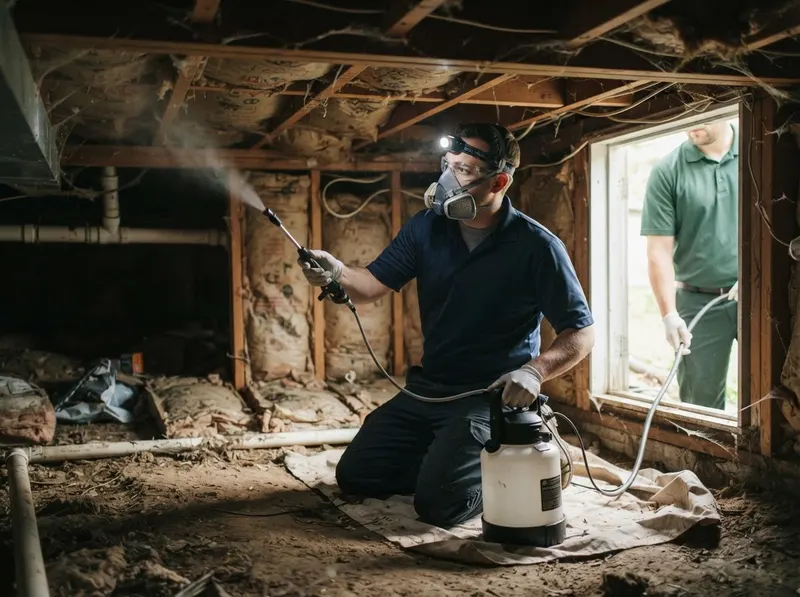
Rodent activity, raccoon latrines, and bat roosts introduce serious biohazard risks beneath the floorboards and above the ceilings of Grand Rapids residences. Fecal accumulation and pheromone trails from mice or squirrels in Victorian walk-ups in Heritage Hill or brick cottages in Alger Heights create secondary risks, such as dermestid beetle infestations and airborne bacterial spores. Crawlspace and attic pest decontamination systematically isolates these unfinished spaces from living areas using negative air pressure machines and critical containment barriers before extraction begins. The process removes contaminated cellulose or fiberglass, neutralizing Leptospira, roundworm eggs, and hantavirus residues with EPA-registered disinfectants rated for residential structures.
Selecting localized sanitization fits situations where an isolated rodent trail traversed a subfloor without penetrating the bulk thermal envelope. In contrast, comprehensive insulation replacement fits situations where mice or bats established multi-point latrines that degraded the R-value below Michigan energy code thresholds (such as R-49 for attic spaces). The primary trade-off balances initial remediation capital against recurring heating costs and indoor air quality degradation; leaving compacted, urine-saturated insulation in place preserves short-term budget reserves but perpetuates volatile organic compound off-gassing into the main home via the stack effect.
Structural realities across Eastown, Creston, and Midtown dictate specialized containment protocols. Moisture rising through unsealed earth in dirt crawlspaces near the Grand River accelerates fungal development alongside rodent urine, requiring a heavy 10-mil to 20-mil vapor barrier alongside chemical decontamination. Homes in Belknap Lookout and Highland Park frequently feature balloon framing, where wall cavities connect unsealed basements directly to the attic. ShieldPeak Pest Services utilizes architectural exclusion measures, such as 16-gauge galvanized steel mesh, fire-rated expanding foam, and elastomeric sealants, to permanently block pest access points while the biological decontamination agents cure.
Every job gets a firm, written price after a free on-site visit.
Tell us about your crawlspace and attic pest decontamination job in Grand Rapids and we'll send a clear, written quote, usually the same day.
 ShieldPeak Pest Services