A professional pest control service in Grand Rapids delivers integrated pest management protocols across Kent County residences to stop structural degradation and biological contamination. Property owners seeking a pest control service near me frequently face nocturnal wall scratching, structural wood damage from carpenter ants, or severe seasonal insect surges.
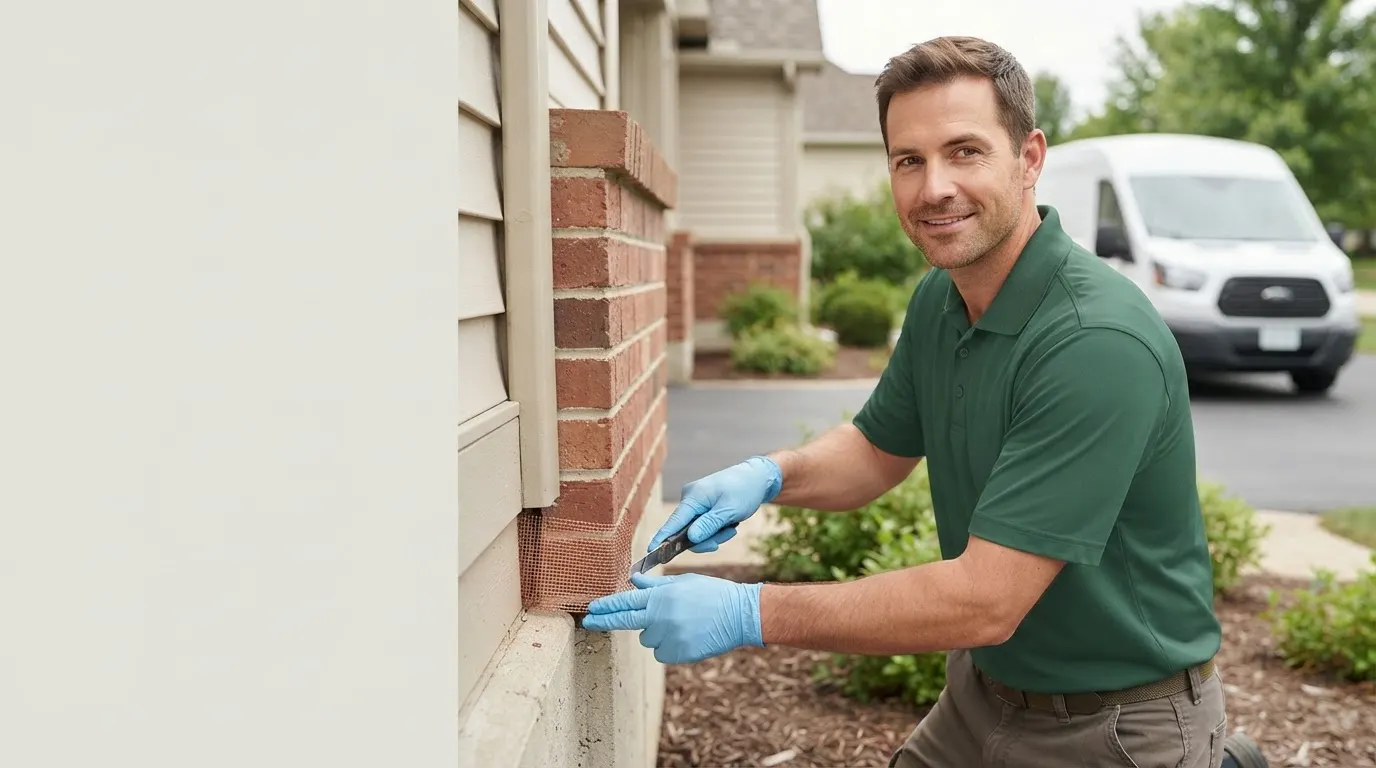
A pest control service in Grand Rapids is an entomological and structural management operation that identifies pest species, eliminates interior nesting colonies, and seals building envelopes to prevent re-infestation.
Every service reflects the same meticulous attention to detail, whether it's a single job or a larger pest control sevice project across Grand Rapids.
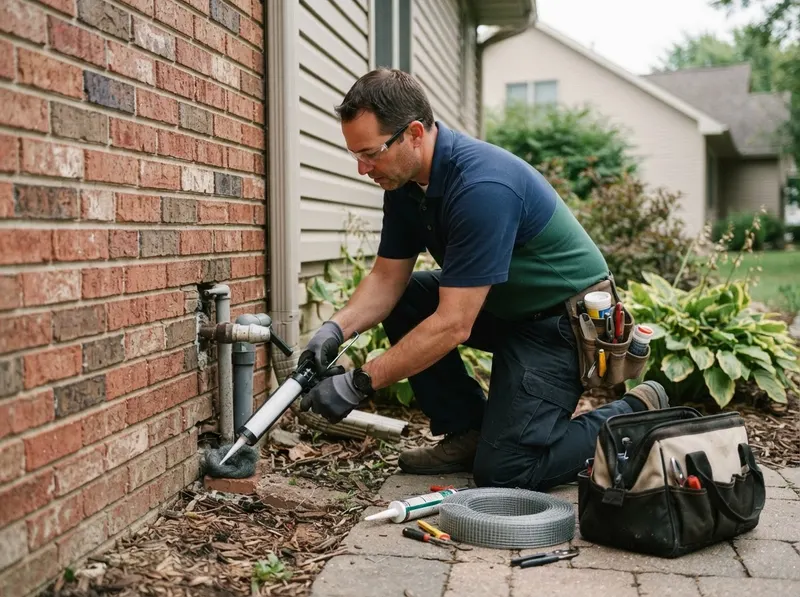
Rodent exclusion terminates structural access for Norway rats, roof rats, and deer mice penetrating building envelopes. Technicians inspect crawlspaces, foundation sill plates, utility penetrations, and soffit tie-ins to catalog entry points. Exclusion involves installing 1/4-inch hot-dipped galvanized steel mesh, copper wire mesh, and metal-reinforced architectural polymers across gaps down to the size of a dime. Interior remediation uses non-toxic mechanical snap traps and covered tamper-resistant bait stations positioned along verified runway rub marks. Trap lines are monitored systematically until catch rates drop to zero, removing carcass odors and ectoparasites. Technicians also clean accessible fecal droppings using HEPA-filtered extraction vacuums and apply botanical sanitizers across insulation to neutralize pheromone scent markers that attract future dispersals.
Get a quote →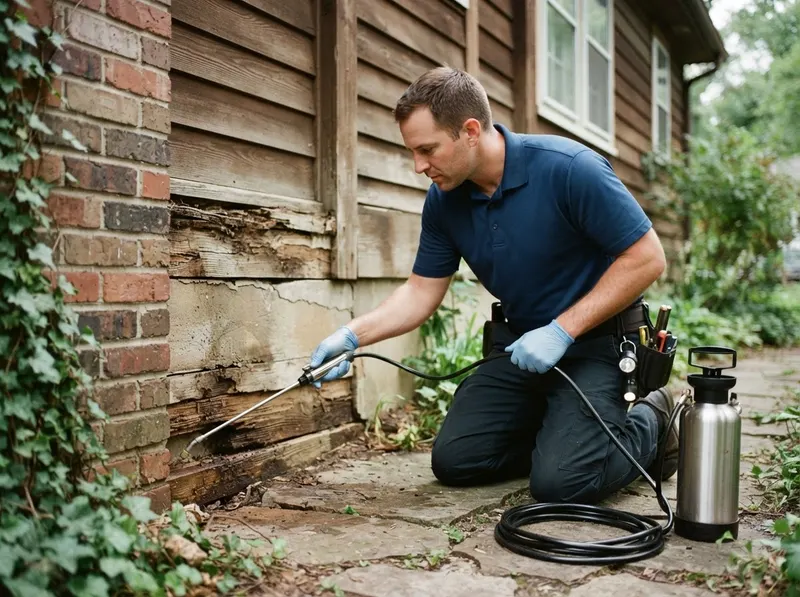
Carpenter ant management targets Camponotus pennsylvanicus colonies excavating nesting galleries inside damp framing, floor joists, and wall studs. Treatment begins with acoustic and thermal imaging inspections to pinpoint satellite colonies within wall voids, window headers, and foam insulation without destructive wall teardowns. Once voids are mapped, technicians inject low-pressure micro-aerosols or dry dust formulations of non-repellent insecticides directly into nesting galleries. Foraging trails leading from nearby hardwood trees are treated with delayed-action liquid non-repellent perimeter barriers. Foragers cross these barriers, absorbing the active ingredient on their cuticles and transferring the lethal dose back to parent queens and nursery larvae via trophallaxis, achieving full colony collapse within 14 to 28 days.
Get a quote →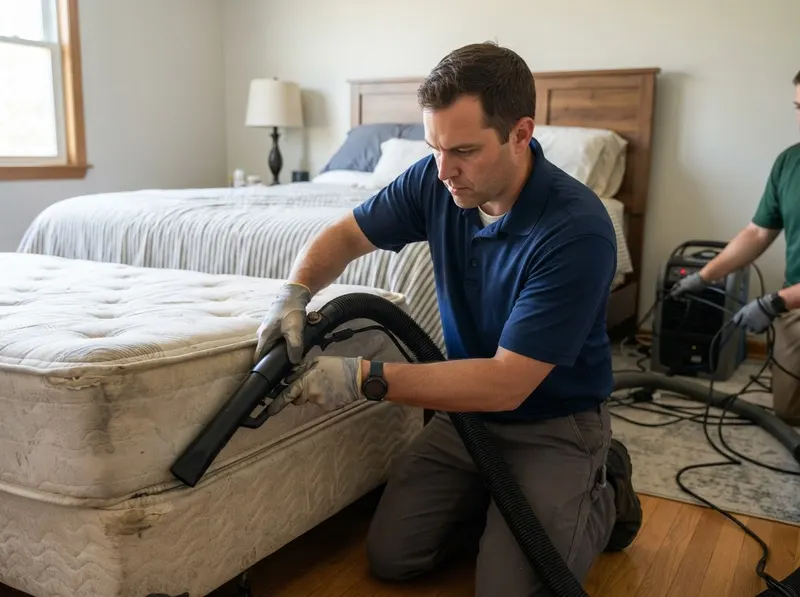
Bed bug remediation halts Cimex lectularius infestations spanning mattress seams, baseboards, electrical junction boxes, and furniture joints. Protocol starts with an exhaustive structural audit using magnifying optics to identify live nymphs, adult insects, fecal spot clusters, and cast skins. Remediations use dual-action chemical protocols pairing concentrated synthetic pyrethroids with non-repellent insect growth regulators (IGRs) and amorphous silica aerogels. Silica dusts are applied inside baseboard voids and switch plates, desiccating bug exoskeletons upon contact. In heavy infestations, targeted structural heat treatments elevate ambient temperatures inside rooms to a lethal threshold of 122°F (50°C) to 135°F (57.2°C) for 4 continuous hours. This heat penetration eradicates all life stages including heat-resistant eggs hidden inside upholstery.
Get a quote →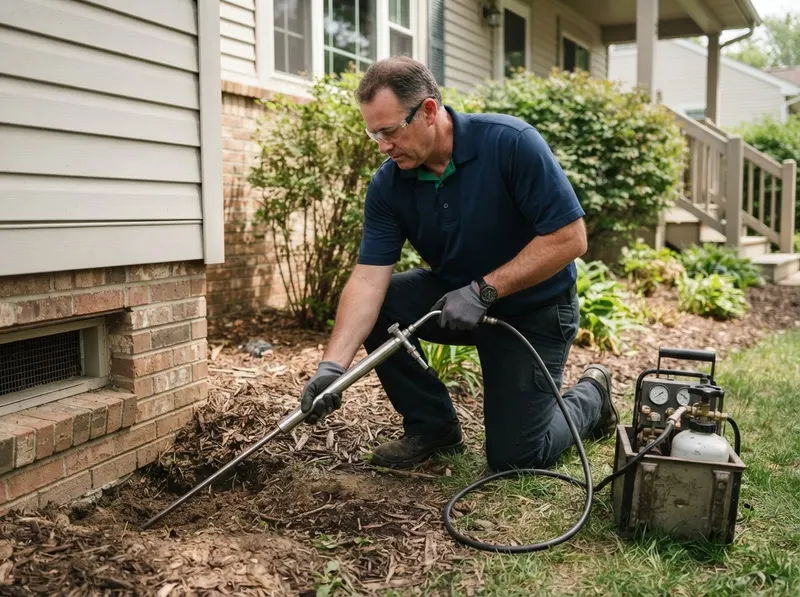
Subterranean termite defense halts Reticulitermes flavipes workers traveling from subterranean moisture reservoirs into load-bearing wooden sills. Remediation utilizes liquid non-repellent termiticides injected into continuous perimeter trenches excavated along the foundation perimeter. Where concrete driveways, porches, or interior slab floors abut living space, technicians drill 1/2-inch vertical pilot holes through masonry spaced 12 inches apart to inject termiticide directly into gravel beds below. The chemical zone binds tightly with soil particles, creating a continuous undetectable barrier. Workers passing through the treated matrix transfer the non-repellent toxicant to reproductive swarmers and the primary subterranean nursery through social grooming. Optional sub-slab baiting stations with chitin synthesis inhibitors are deployed around yard perimeters for ongoing subterranean suppression.
Get a quote →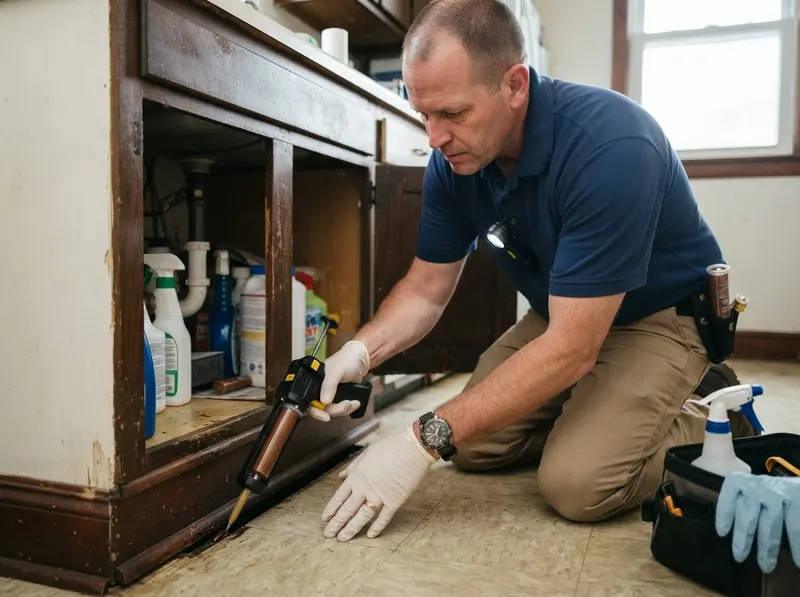
Cockroach remediation eradicates German, American, and Oriental cockroach infestations inside kitchens, bathrooms, boiler rooms, and multi-family plumbing wet walls. Technicians avoid broadcast wet sprays that scatter roaches deeper into structural voids. Instead, crews deploy precise spot placements of high-lipid, protein-balanced gel baits containing slow-acting active ingredients alongside micro-encapsulated juvenile hormone mimics. Roaches consuming the bait return to dark aggregations behind cabinetry, motor housings, and kick plates, dying within 24 to 72 hours. Secondary mortality occurs when newly hatched nymphs ingest contaminated feces or dead adults. Monitoring insect glue traps are placed under sinks, behind refrigerators, and inside plumbing penetrations to verify steady population reduction across weekly inspection cycles.
Get a quote →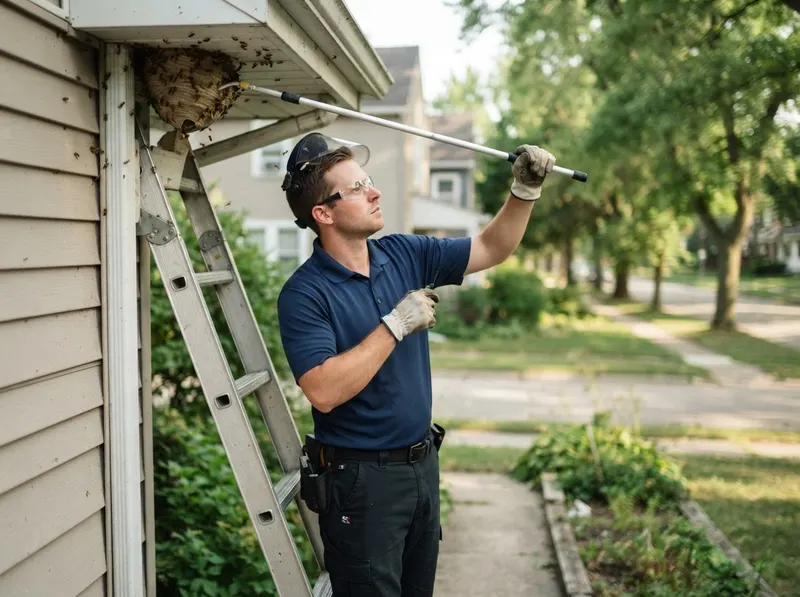
Stinging insect remediation extracts baldfaced hornets, paper wasps, aerial yellowjackets, and subterranean yellowjacket colonies from exterior eaves, attics, and landscaping. Technicians arrive in protective protective bee suits equipped with long-reach carbon-fiber application lances. Underground and wall-void nests are injected with pyrethrin-based contact flushes followed by residual desiccant dusts that coat entry channels, neutralizing aggressive guard wasps instantly. Exterior paper and bald-faced hornet nests hanging from peaks or soffits are saturated with rapid-freeze sprays and carefully sliced from structural anchors into bio-hazard containment bags. Technicians clean nest footprint areas to remove homing pheromones and apply micro-encapsulated residuals to deter competing queens from founding new nests in the same eave pocket.
Get a quote →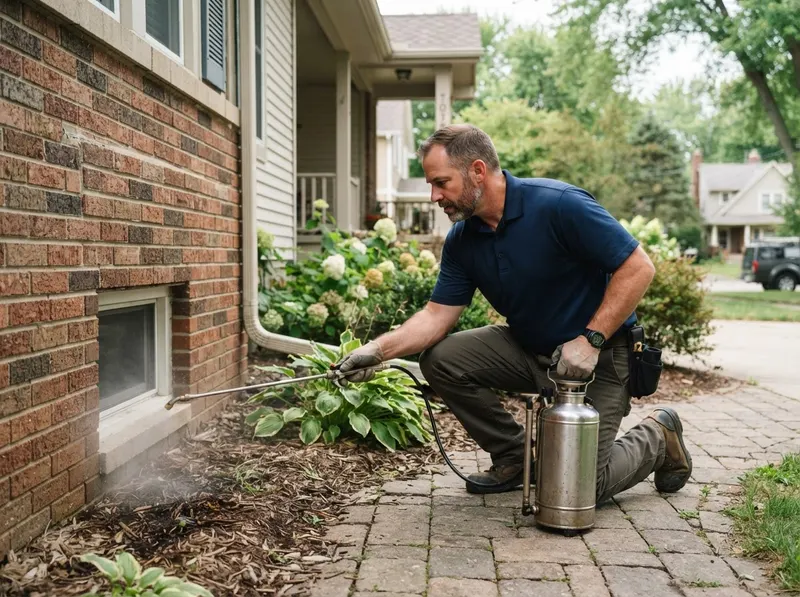
Seasonal exterior perimeter defense forms an invisible barrier around a home’s structural foundation to arrest crawling insect entry. ShieldPeak Pest Services technicians apply micro-encapsulated residual formulations using specialized low-drift backpack spray rigs. The treatment band covers 3 vertical feet up the foundation wall and 6 to 10 horizontal feet across soil, mulch beds, and concrete flatwork. Focus areas include door thresholds, basement egress windows, crawlspace air vents, electrical conduit entries, and under-deck voids. The micro-capsules adhere to rough aggregate, concrete, and soil, resisting UV degradation and precipitation for up to 90 days. Target pests halted by this defensive shield include wolf spiders, centipedes, millipedes, earwigs, boxelder bugs, and brown marmorated stink bugs.
Get a quote →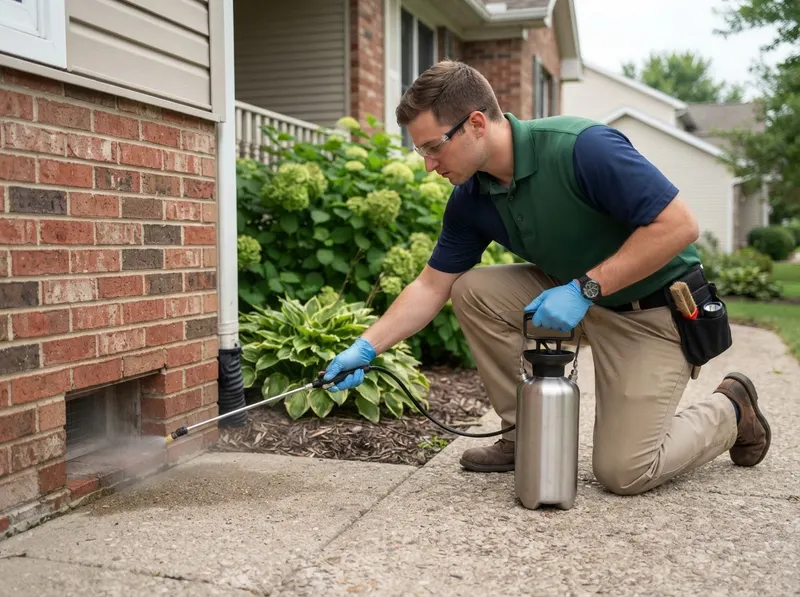
Spider and interior crawling insect management targets house spiders, cellar spiders, wolf spiders, and basement centipedes thriving in dark, damp micro-climates. Technicians utilize telescopic sweeping poles equipped with electro-statically charged poly-fiber dusters to sweep spider webs, egg sacs, and insect carcasses from ceiling peaks, floor joists, and window wells. After physical web removal, technicians apply pyrethroid micro-emulsions to unfinished basement perimeter ledges, baseboard tracks, and furnace rooms. In addition, technicians apply non-staining microfine silica dust into unfinished sill plate cavities and under wall insulation where spiders lie in wait. By eliminating the underlying insect prey populations through perimeter protection, predatory spider counts decline naturally across interior living areas.
Get a quote →You get a firm, itemized quote for your pest control sevice before any work begins, no surprises, no pressure.
Careful prep, tidy work, and a full cleanup when we are done. We treat your home and belongings like our own.
The same trusted, background-checked team from the first call to the final check.
Selecting the proper remediation model depends on whether an infestation stems from an established indoor colony, an open structural breach, or seasonal insect migration. If you want immediate population collapse for active indoor colonies of German cockroaches or bed bugs, choose species-targeted indoor bio-rational baiting combined with insect growth regulators; this strategy distributes active ingredients directly through the nesting population without dispersing individuals into neighboring rooms. If you want to stop attic thumping, crawlspace nesting, or scratching noises behind drywall, choose mechanical rodent exclusion and multi-point trapping; this physically seals 1/4-inch foundation weep holes, gable vents, and pipe chases with galv-mesh and architectural elastomeric sealants before setting interior mechanical trap lines.
The trade-off is mechanical exclusion requires structural labor and exterior ladder work, whereas standalone trapping only reduces the active interior census without preventing new field mice or rats from re-entering next week. If you want whole-home prevention against subterranean termites or carpenter ants, choose targeted sub-surface soil liquid barriers and structural wood injections rather than exterior perimeter contact fogging. Perimeter sprays suppress surface worker ants for 30 to 60 days, whereas targeted slow-acting non-repellent transfer agents allow foraging workers to carry the active compound deep into satellite nests within framing timbers, eliminating reproductive queens.
Property owners managing historic wood construction in Heritage Hill should choose deep-void non-repellent injections, accepting that colony collapse takes 14 to 21 days to complete, whereas owners dealing with immediate kitchen ant clusters can deploy quick-acting carbohydrate gel matrices for surface knockdown within 48 hours.
Every project gets a firm, written price after a free on-site visit. Ranges below for orientation.
Tell us about your pest control sevice job and we'll send a clear, written quote, usually the same day. Or just call and talk to a real Grand Rapids pro.
(616) 369-5556
Grand Rapids residential architecture presents structural pest vectors unique to West Michigan's topography and river valley climate. In historic districts like Heritage Hill and East Hills, 19th-century balloon-frame structures and rough-cut fieldstone foundations allow subterranean mice and moisture-seeking carpenter ants unhindered access to uninsulated wall voids from basement footings to third-story attics. Proximity to the Grand River, Millennium Park wetlands, and the moist soils surrounding Fish Ladder Park fosters intense summer mosquito breeding and aggressive fall migrations of deer mice seeking warm nesting harborage as autumn temperatures plummet. Properties throughout Creston, Belknap Lookout, and Alger Heights frequently suffer spring subterranean termite swarms driven by sandy-loam soils and heavy snowmelt saturating perimeter wood framing near grade. ShieldPeak Pest Services resolves these localized conditions through architectural-grade sealing of fieldstone gaps, non-repellent transfer barriers, and attic moisture ventilation checks designed specifically for Kent County's freezing winters and humid summers.
Free estimates for Grand Rapids & the surrounding area.
 ShieldPeak Pest Services