Bed bug thermal and chemical remediation in Grand Rapids, MI resolves the critical failure point of single-method treatments: egg survival and structural displacement. Thermal remediation raises ambient interior air to…
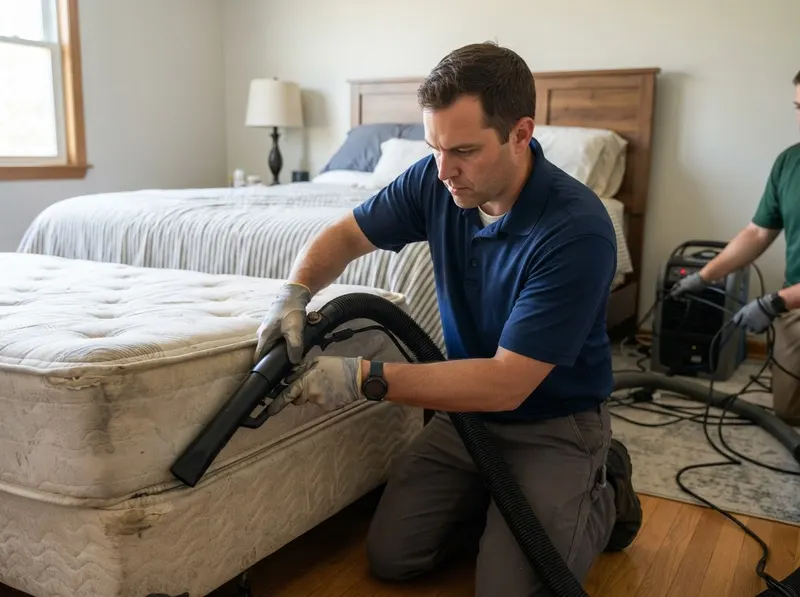
Bed bug thermal and chemical remediation in Grand Rapids, MI resolves the critical failure point of single-method treatments: egg survival and structural displacement. Thermal remediation raises ambient interior air to a lethal range of 122°F to 135°F using industrial convective electric or indirect-fired heaters, holding this thermal threshold for a minimum of 4 continuous hours. Heat penetrates heavy upholstery, wall cavities, and subflooring where contact liquids cannot reach. To address bed bugs attempting to flee thermal gradients into cooler exterior wall boundaries, ShieldPeak Pest Services pairs heat cycles with a chemical safety perimeter using targeted desiccant dusts and non-repellent micro-encapsulated residuals. These botanical and synthetic barriers remain active for 60 to 90 days to eliminate emerging nymphs.
The choice between standalone chemical protocols and integrated thermal treatment depends on structural architecture and infestation density. Single-room containment suits isolated introductions in modern drywalled structures, whereas historic multi-family properties, such as turn-of-the-century residences throughout Heritage Hill, Eastown, and Midtown, feature lathe-and-plaster walls, shared balloon framing, and deep floorboard gaps that allow colonies to evade liquid applications. For deep harborages in older properties across Creston, Belknap Lookout, and Alger Heights, whole-structure thermal remediation is the definitive solution, trading higher initial equipment staging for same-day colony mortality without requiring disposal of primary mattresses and furniture.
Preparatory protocol directly governs thermal distribution efficiency. Homeowners remove pressurized canisters, heat-sensitive medical compounds, wax items, and oil paintings prior to treatment staging. Technicians monitor ambient and interior thermal probes placed inside structural voids, dresser cores, and mattress seams to verify core lethal temperatures before initiating chemical barrier application around plumbing chases, switch plates, and door thresholds. In multi-unit properties across Westside Connection and Highland Park, barrier chemical application extends to adjacent wall partitions to prevent cross-unit migration through shared pipe chases and conduit lines.
Every job gets a firm, written price after a free on-site visit.
Tell us about your bed bug thermal and chemical remediation job in Grand Rapids and we'll send a clear, written quote, usually the same day.
 ShieldPeak Pest Services